



4 ways to protect yourself from wildfire smoke
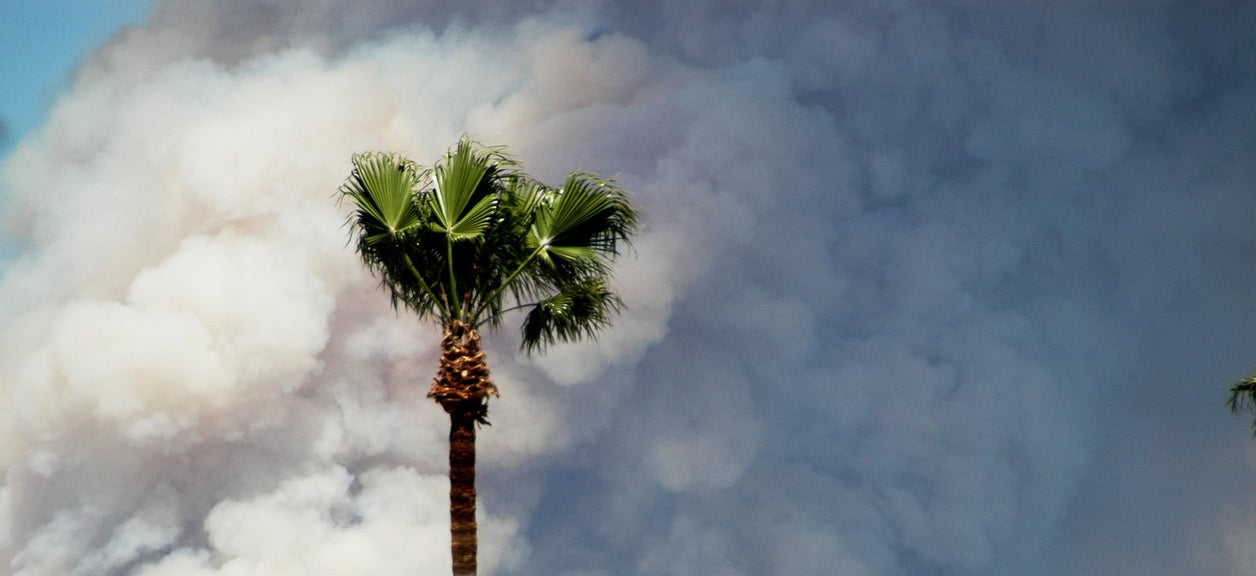
In recent years, as wildfires have devastated communities around the world, one dangerous byproduct has received less attention: wildfire smoke. In the wake of a fire, heavy smoke envelops the surrounding areas, creating severe air pollution levels with serious health effects. That’s because the thick smoke fills the air with harmful particles, causing everything from coughing to long-term health conditions, such as lung and cardiac diseases.
If you live in or near an affected area, it’s difficult to protect yourself and your family completely from this pollution, but there are steps you can take to minimize the harmful effects.
1. Know your risk
Smoke travels
The impact from wildfires goes far beyond the flames. Wildfire smoke can travel for many miles and pose a health threat. Just like people in wildfire zones are advised to create “defensible space” around their homes, it’s also crucial for people in proximity to wildfire areas to protect themselves from wildfire smoke.
Air quality is affected
Climate scientists and meteorologists have seen prevailing winds carrying wildfire smoke across the continent. As plumes rise to 20,000 feet and above, they get caught up in the jetstream — high-altitude currents that circuit air quickly from west to east. In the best-case scenario, pollutants don’t set off air-quality alerts, but instead create colorful sunsets; in the worst-case scenario, air quality can plummet to unhealthy levels.
Wildfire smoke is worse than other types
When a wildfire burns through a community, it consumes everything in its path. This includes all kinds of household materials, like rubber, plastics, metals and more. In the heat of the fire, these materials become tiny, airborne toxins. The fine particles then irritate people’s eyes and throats. They can also cause respiratory issues if taken into the lungs. Further, one study revealed that elderly people, children and pregnant women are especially vulnerable to the particles released from wildfires.
2. Cut down on your exposure
Stay indoors if you can
If you must be outside, reduce strenuous exercise. Best is to stay indoors with the doors and windows closed: By doing so, you can reduce indoor pollutant levels by 50 percent. This is especially important for children, the elderly and those with heart or respiratory problems. Remember to keep your car windows shut, too.
Do air conditioners filter wildfire smoke?
While indoors during wildfire season, you can run an air conditioner, but it’s important to close down the outside air intake to prevent outdoor smoke from getting inside. If the intake is open, the filter on commercial air conditioners will not catch dangerous particles from wildfire smoke.
Keep your indoor air clean
Also, avoid activities that can increase indoor air pollution. For example, if you’re cleaning your home, don’t use items likely to introduce extra chemicals into the air, like aerosol cleaning products. And avoid burning candles, using gas stoves and vacuuming.
3. Choose a mask carefully
Smaller particles are more dangerous
The hazardous particles in wildfire smoke come in various sizes, but the smallest are the most dangerous. Because they’re so tiny, they’re able to make their way deep into the lungs and bloodstream, causing everything from asthma attacks to cancer. In addition, the combination of different gases in smoke clouds can form surface-based ozone, which also can lead to health problems.
Respirator masks are best
A scarf or bandanna won’t filter out many pollutants. Probably no surprise there. But neither will dust masks designed to trap large particles, such as sawdust. More effective are respirator masks. Sold at many hardware and home repair stores, as well as pharmacies, they filter out fine particles. Look for masks labeled N95 or N100, which denotes, among other things, the percentage of particles that are blocked.
Choose a size that will fit over your nose and under your chin and create a tight seal over your face. At the same time, be aware there can be risks to wearing a mask, partly because they can make it difficult for wearers to get enough oxygen.
4.Use an air purifier
An air purifier for wildfire smoke
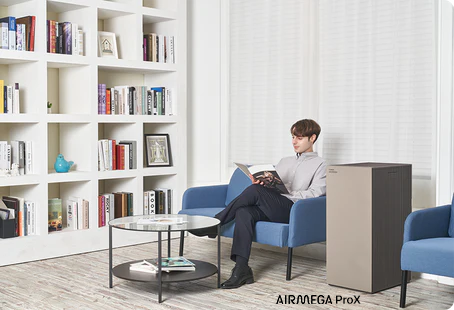
Air purifiers with a HEPA filter, like Coway Airmega’s smart air purifier, help to eliminate certain particulate matter and other pollutants from your home. It’s best to place the device in rooms where you spent a lot of time, like the bedroom or kitchen, to reduce the total amount of harmful air you inhale.
The Coway Airmega constantly monitors indoor air quality. When the unit senses a decrease in air quality, it automatically activates the air purification process and removes harmful particles. Even in the event of a distant wildfire, the Coway Airmega can provide safe, clean air for you and your family.
Disclaimers
1 Airmega air purifiers have been proven to trap dust, pollen, dander in the air based on KCL(Korea Conformity Laboratories) testing. They have been tested according to the Korea Air Cleaning Association standard (SPS-KACA 002-132:2022 Modified) to measure the 0.01㎛ size of particle removal rate. It was tested on maximum airflow speed in normal room temperature and humidity conditions. The performance may vary in the actual living environment of customers. Tested with Airmega Aim, 50, 100, 150, Tower AP-1216L, Mighty AP-1512HH, MightyS AP-1512HHS, 200M, Icon, 230, 240, 250, 250S, 300, 300S, 350, 400, 400S, 450, ProX
2Our HEPA filter complies with IEST-RP-CC007 standards at speed level 1 as tested by SGS (Société Générale de Surveillance). SGS's test report only reflects SGS's evaluation of the sample and does not reflect the evaluation of the batch of goods from which the sample was taken. Tested with Airmega 100, 150, 160, Mighty AP-1512HH, MightyS AP-1512HHS, 200M, 230, 240, 250, 250S, 250 Art, 300, 300S, 350, 400, 400S, 450, ProX
3 Tested by KCL(Korea Conformity Laboratories) according to JEM 1467: 2015 condition, the concentration of acetic acid was proven to be reduced up to 99.5% in 60 minutes. Results may vary depending on actual environment. Tested with Airmega 150, Mighty AP-1512HH, 200M
4 Tested by KCL(Korea Conformity Laboratories) according to SPS-KACA002-132:2022, showed result of over 99.5% removal rate of common household gases including Ammonia, Acetaldehyde, Acetic acid, Formaldehyde, Toluene, Benzene, Nitrogen dioxide (NO₂), and Sulfur dioxide (SO₂) within 30 minutes. Results may vary in different environments and not all odors or gas particles may be removed. Tested with Airmega MightyS AP-1512HHS, 250S, 300S, 400S, 350, 450
5 Test conducted using Coway Allergen filter media (5×5 cm) placed in a polyethylene bag. The allergen solution and sample were immersed in 2 mL of phosphate buffer (100 ng/mL) prior to the reaction and heat-sealed to specimen size. The reaction was maintained at 4°C for 24 hours. Nichinichi Pharmaceutical Co., Ltd. conducted the test using ELISA to measure allergen concentration. Results may vary in actual product usage environments. Tested with Airmega Mighty AP-1512HH, 200M
6 Removal rates of Ammonia (NH₃) and Hydrogen Sulfide (H₂S) were tested in a 1 m³ chamber under EL608:2023 conditions for 30 minutes. Gas Detector Tubes were used for measurement, and testing was conducted by KCL (Korea Conformity Laboratories). Results may vary in actual product usage environments. Tested with Airmega Mighty AP-1512HH, 200M
7 Reduction rates of Naphthalene, Sulfur Dioxide, and Nitrogen Dioxide were tested using the Airmega Mighty AP-1512HH in 1㎥ chamber, following JEM-1467:2015 standards. Tests were conducted by Intertek. Actual performance may vary depending on the living environment. Tested with Airmega Mighty AP-1512HH, 200M
9 Tested by KCL(Korea Conformity Laboratories) according to SPS-KACA002-132:2022. The test was conducted with Methyl mercaptan, Isovaleraldehyde, Isovaleric acid in a 1.0±0.1 m³ chamber with a test time of 60 minutes at (24±4)°C and (46±10)% Relative Humidity. A removal ratio of over 99.5% was achieved. Results may vary depending on the actual usage environment. Tested with Airmega 350, 450
10 Tested by the Guangzhou Institute of Microbiology, exposed the filter media to protein solutions for 24 hours under ISO 4333-2022 standard. The results showed strong reduction performance: >99.79% for pollen, >99.60% for dog allergen, >99.90% for cat allergen, and >99.80% for dust mites matter allergen. Actual results may vary depending on room size, airflow, and pollutant levels. Tested with Airmega 350, 450
11 Tested by KCL(Korea Conformity Laboratories) according to SPS-KACA002-132:2022. The test was conducted in a 1.0±0.1 m³ chamber for 60 minutes at (24±4)°C and (46±10)% Relative Humidity. A removal ratio of >99.5% was achieved for Formaldehyde and Toluene in 60 minutes. Results may vary depending on the actual usage environment. Tested with Airmega 350, 450
12 Tested by Intertek. The evaluation was conducted against designated test materials: Sulfur dioxide, Nitrogen dioxide, and Naphthalene. The test was performed in a sealed 1.0×1.0×1.0 m (1.0 m³) odor chamber at a test room temperature of (23±2)°C (measured between 23.6∼23.9°C) and a test room humidity of (45±5)% R.H. (measured between 40∼48)% Relative Humidity. It met the odor removal rate of ≥99.9% for Sulfur dioxide, Nitrogen dioxide, and Naphthalene. Results may vary depending on the actual usage environment. Tested with Airmega 350, 450
* Order Acceptance and Right to Cancel: The receipt of an order confirmation does not constitute Coway’s acceptance of an order. Coway reserves the right, at its sole discretion and at any time after receiving your order, to accept, decline, or cancel your order for any reason. If Coway cancels your order after you have already been billed, we will notify you via the email address provided and issue a full refund of any billed amounts immediately.
**Shipping Policy & Restrictions: Free standard ground shipping is available only for qualifying orders shipped to standard residential and commercial addresses within the Canadian provinces. Please note that we do not ship to P.O. Boxes. We reserve the right to exclude and cancel free shipping to the Canadian Territories (Yukon, Northwest Territories, and Nunavut), as well as certain remote locations or postal codes—including remote areas within British Columbia (BC)—that qualify as remote regions under carrier guidelines. In such cases, Coway reserves the right to cancel the order and issue a full refund.



