






Clean air doesn’t just happen
Throughout our recent history, air quality and concerns around air pollution have become more and more prevalent. This week, we’re taking a look at some key moments in history to get a better understanding of where we’ve come from and where we are today.
Industrialization and the beginning of air awareness
The industrial revolution is well-known for the damaging effects of air pollution—particularly in England, from Charles Dickens novels to accounts of soot-covered streets and buildings. But, perhaps one of the most powerful events of the 20th century happened in more recent times.
What became known as the Great Smog of 1952 was, in many ways, the culmination of years of pollutants from urban areas mixing with air condensation, which created a blanket of smog across London. The smog lasted for multiple days and was estimated to have killed anywhere from 8,000-12,000 people (estimates vary).
After this horrific occurrence, parliament passed the Clean Air Act of 1956, which restricted the burning of coal in urban areas and authorized local councils to create smoke-free zones. Those who owned homes were also incentivized (using a grant system) to convert their heating systems from coal to an alternative, like oil.
Similarly, in Donora, PA around 20 people were killed by air pollution in 1948. Considered the worst air pollution disaster in U.S. history, this, and other events, would eventually lead to the U.S. Clean Air Act passed in 1970, and additional regulation from the state and federal levels to help reduce and regulate pollution in the U.S.
Car culture and its effects
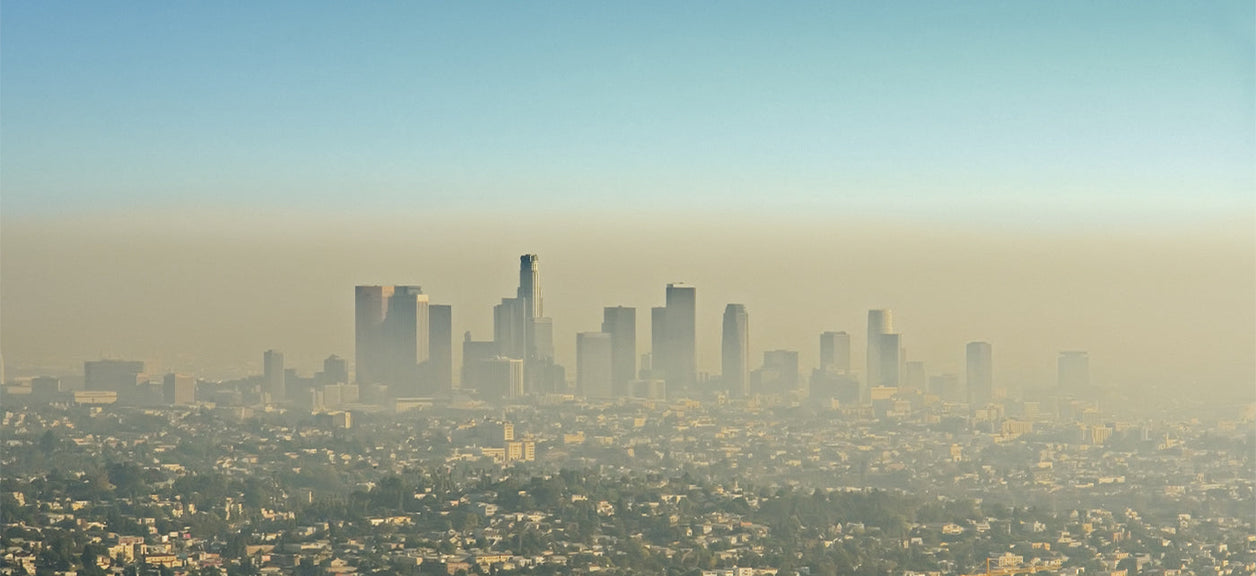
Even with the Clean Air Act in place, the U.S. continued to struggle with air pollution and poor air quality, particularly in metropolitan areas where many people drive, such as California. Within the U.S., California is well-known for their regulations on air quality, but it wasn’t always the case. Following the post-war population boom, combined with auto exhaust and atmospheric conditions that contribute to a heavy layer of smog each morning, the L.A. area became notorious for its poor air quality, sparking the more strict California emissions standards. California regulations include ambient air quality standards (AAQS), specifically related to particulate matter and ozone, which are not covered under federal standards. As more research becomes available, people across the U.S. and worldwide are becoming more aware of the impact of particulate matter on health. California’s laws are just one way to help reduce exposure to particulate matter and other airborne dangers.
Indoor smoking and secondhand smoke regulations
It wasn’t until the 1980s that smoking bans began to appear in enclosed public places like airplanes and restaurants, beginning with the implementation of designated smoking areas, following concerns about second-hand smoke exposure. Local governments began to ban smoking in more places, with the banning of smoking in New York bars being a landmark moment in 2003. Then in 2010, the U.S. government rolled out its “A Healthy People” objective, calling for the elimination of smoking in all public places and worksites in all 50 U.S. states (and D.C.). Although not all 50 states met this objective, smoking in public spaces has been dramatically reduced throughout the country, with many venues such as restaurants and bars becoming smoke-free. By reducing smoking in public spaces, fewer adults and children are exposed to secondhand smoke, helping to create a safer, healthier environment.
VOC legislation and air awareness today
As part of the U.S. Clean Air Act, VOCs or Volatile Organic Compounds are now regulated in many man-made products. VOCs are a top contributor to ground-level ozone and air pollution, particularly when they react with oxides of nitrogen in the air. VOCs also affect indoor air quality, with concentrations being up to 10 times higher. To combat this, the Clean Air Act helps to regulate the amount of VOCs that can be used in products such as cleaning solutions. Legislation around VOC emissions varies by state, and the landscape of limitation and regulation continues to evolve today.
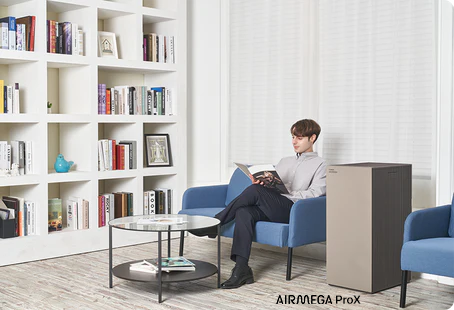
So, what does this all mean for us? As we continue to learn more about the importance of air quality and our impact on the air around us, legislation will continue to evolve. Although it may be challenging to control the air in the outside world, one thing you can control is the air in your home. Whether you live in a city and see the effects of smog every day, or are tackling seasonal allergies, the air quality around you is ever-changing. A HEPA air purifier is one way to help fight back against poor air quality and help keep your environment safe so you can breathe deeper.
Disclaimers
1 Airmega air purifiers have been proven to trap dust, pollen, dander in the air based on KCL(Korea Conformity Laboratories) testing. They have been tested according to the Korea Air Cleaning Association standard (SPS-KACA 002-132:2022 Modified) to measure the 0.01㎛ size of particle removal rate. It was tested on maximum airflow speed in normal room temperature and humidity conditions. The performance may vary in the actual living environment of customers. Tested with Airmega Aim, 50, 100, 150, Tower AP-1216L, Mighty AP-1512HH, MightyS AP-1512HHS, 200M, Icon, 230, 240, 250, 250S, 300, 300S, 350, 400, 400S, 450, ProX
2Our HEPA filter complies with IEST-RP-CC007 standards at speed level 1 as tested by SGS (Société Générale de Surveillance). SGS's test report only reflects SGS's evaluation of the sample and does not reflect the evaluation of the batch of goods from which the sample was taken. Tested with Airmega 100, 150, 160, Mighty AP-1512HH, MightyS AP-1512HHS, 200M, 230, 240, 250, 250S, 250 Art, 300, 300S, 350, 400, 400S, 450, ProX
3 Tested by KCL(Korea Conformity Laboratories) according to JEM 1467: 2015 condition, the concentration of acetic acid was proven to be reduced up to 99.5% in 60 minutes. Results may vary depending on actual environment. Tested with Airmega 150, Mighty AP-1512HH, 200M
4 Tested by KCL(Korea Conformity Laboratories) according to SPS-KACA002-132:2022, showed result of over 99.5% removal rate of common household gases including Ammonia, Acetaldehyde, Acetic acid, Formaldehyde, Toluene, Benzene, Nitrogen dioxide (NO₂), and Sulfur dioxide (SO₂) within 30 minutes. Results may vary in different environments and not all odors or gas particles may be removed. Tested with Airmega MightyS AP-1512HHS, 250S, 300S, 400S, 350, 450
5 Test conducted using Coway Allergen filter media (5×5 cm) placed in a polyethylene bag. The allergen solution and sample were immersed in 2 mL of phosphate buffer (100 ng/mL) prior to the reaction and heat-sealed to specimen size. The reaction was maintained at 4°C for 24 hours. Nichinichi Pharmaceutical Co., Ltd. conducted the test using ELISA to measure allergen concentration. Results may vary in actual product usage environments. Tested with Airmega Mighty AP-1512HH, 200M
6 Removal rates of Ammonia (NH₃) and Hydrogen Sulfide (H₂S) were tested in a 1 m³ chamber under EL608:2023 conditions for 30 minutes. Gas Detector Tubes were used for measurement, and testing was conducted by KCL (Korea Conformity Laboratories). Results may vary in actual product usage environments. Tested with Airmega Mighty AP-1512HH, 200M
7 Reduction rates of Naphthalene, Sulfur Dioxide, and Nitrogen Dioxide were tested using the Airmega Mighty AP-1512HH in 1㎥ chamber, following JEM-1467:2015 standards. Tests were conducted by Intertek. Actual performance may vary depending on the living environment. Tested with Airmega Mighty AP-1512HH, 200M
9 Tested by KCL(Korea Conformity Laboratories) according to SPS-KACA002-132:2022. The test was conducted with Methyl mercaptan, Isovaleraldehyde, Isovaleric acid in a 1.0±0.1 m³ chamber with a test time of 60 minutes at (24±4)°C and (46±10)% Relative Humidity. A removal ratio of over 99.5% was achieved. Results may vary depending on the actual usage environment. Tested with Airmega 350, 450
10 Tested by the Guangzhou Institute of Microbiology, exposed the filter media to protein solutions for 24 hours under ISO 4333-2022 standard. The results showed strong reduction performance: >99.79% for pollen, >99.60% for dog allergen, >99.90% for cat allergen, and >99.80% for dust mites matter allergen. Actual results may vary depending on room size, airflow, and pollutant levels. Tested with Airmega 350, 450
11 Tested by KCL(Korea Conformity Laboratories) according to SPS-KACA002-132:2022. The test was conducted in a 1.0±0.1 m³ chamber for 60 minutes at (24±4)°C and (46±10)% Relative Humidity. A removal ratio of >99.5% was achieved for Formaldehyde and Toluene in 60 minutes. Results may vary depending on the actual usage environment. Tested with Airmega 350, 450
12 Tested by Intertek. The evaluation was conducted against designated test materials: Sulfur dioxide, Nitrogen dioxide, and Naphthalene. The test was performed in a sealed 1.0×1.0×1.0 m (1.0 m³) odor chamber at a test room temperature of (23±2)°C (measured between 23.6∼23.9°C) and a test room humidity of (45±5)% R.H. (measured between 40∼48)% Relative Humidity. It met the odor removal rate of ≥99.9% for Sulfur dioxide, Nitrogen dioxide, and Naphthalene. Results may vary depending on the actual usage environment. Tested with Airmega 350, 450
* Order Acceptance and Right to Cancel: The receipt of an order confirmation does not constitute Coway’s acceptance of an order. Coway reserves the right, at its sole discretion and at any time after receiving your order, to accept, decline, or cancel your order for any reason. If Coway cancels your order after you have already been billed, we will notify you via the email address provided and issue a full refund of any billed amounts immediately.
**Shipping Policy & Restrictions: Free standard ground shipping is available only for qualifying orders shipped to standard residential and commercial addresses within the Canadian provinces. Please note that we do not ship to P.O. Boxes. We reserve the right to exclude and cancel free shipping to the Canadian Territories (Yukon, Northwest Territories, and Nunavut), as well as certain remote locations or postal codes—including remote areas within British Columbia (BC)—that qualify as remote regions under carrier guidelines. In such cases, Coway reserves the right to cancel the order and issue a full refund.



