






Is there a link between air pollution and male infertility?
Research has shown a link between poor air quality and everything from prenatal health to upper respiratory problems. Now, a new study indicates it may have a negative impact on male fertility.
A team of researchers at the Chinese University of Hong Kong and elsewhere recently studied the health effects of fine particulate pollution on male fertility. Their findings: a decrease in the size and shape of sperm, a phenomenon that could result in infertility.
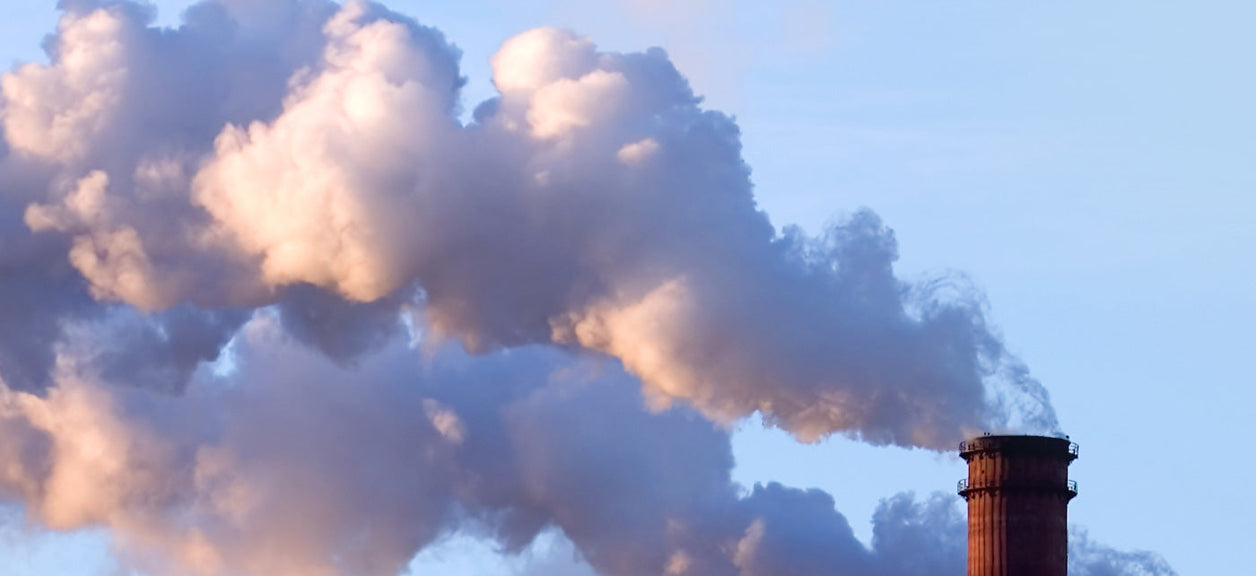
The particulate matter comes from pollution emitted from power plants, cars, smokestacks and the like, that contain potentially toxic chemicals such as heavy metals. After breathing the air, the particles enter the bloodstream. Because their size is so small—30 times smaller than the thickness of human hair—they’re easier to inhale deeply into the lungs.
Researchers studied medical examination data spanning 2001 to 2014 from 6,500 15- to 49-year-old men and compared that to fine particulate levels at their home addresses. They found a correlation between air pollution levels and abnormal sperm shape. Specifically, high levels of air pollution were associated with a 26 percent increase in the risk of being in the lower 10 percent of average sperm size and shape.
The study didn’t demonstrate a direct cause and effect between air pollution and lower sperm quality. But in their report, researchers point to earlier experiments on animals that found sperm damage caused by cadmium, a potentially carcinogenic metal derived from burning fossil fuels and polycyclic aromatic hydrocarbons, which are in things such as vehicle exhaust and fumes from asphalt roads.
While the change in sperm size and shape linked to poor air quality is small, the report also suggests the implications are large, given the widespread scale of air pollution and, especially, the harmful effects of particulate matter. With that in mind, researchers say it could result in “a significant number of couples with infertility.”
The findings underscore earlier work by researchers in the Czech Republic, who also discovered evidence of alterations in sperm quality due to exposure to air pollution. That study examined two groups of 18-year-old men, one living in a highly industrialized district with seasonally high levels of air pollution and another from a rural area with relatively clean air. During periods of higher levels of air pollution, the sperm of subjects in the first region showed greater decreases in motility and increases in abnormal shapes.
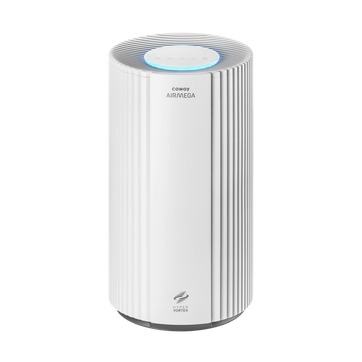
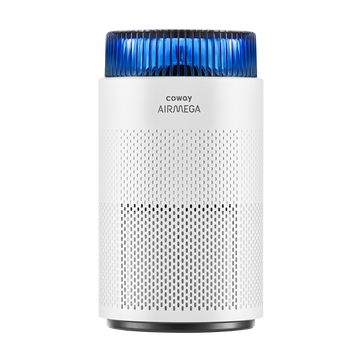
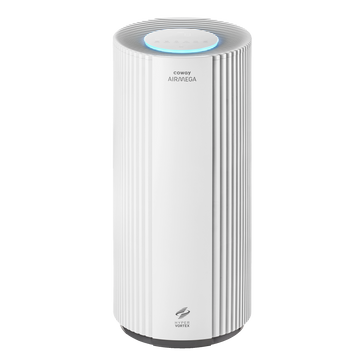
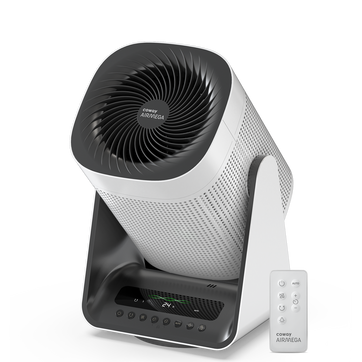
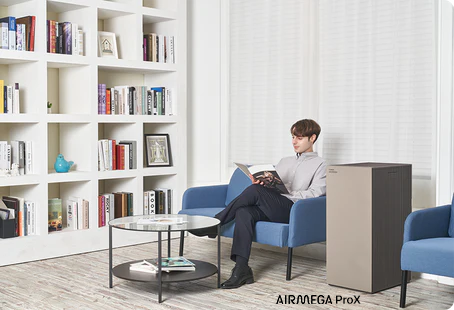
What can you do? One step to take is to keep the air in your home clean by using a smart air purifier with a HEPA filter, like Airmega. That can help cut down on the amount of unhealthy particulate matter you inhale.
Disclaimers
1 Airmega air purifiers have been proven to trap dust, pollen, dander in the air based on KCL(Korea Conformity Laboratories) testing. They have been tested according to the Korea Air Cleaning Association standard (SPS-KACA 002-132:2022 Modified) to measure the 0.01㎛ size of particle removal rate. It was tested on maximum airflow speed in normal room temperature and humidity conditions. The performance may vary in the actual living environment of customers. Tested with Airmega Aim, 50, 100, 150, Tower AP-1216L, Mighty AP-1512HH, MightyS AP-1512HHS, 200M, Icon, 230, 240, 250, 250S, 300, 300S, 350, 400, 400S, 450, ProX
2Our HEPA filter complies with IEST-RP-CC007 standards at speed level 1 as tested by SGS (Société Générale de Surveillance). SGS's test report only reflects SGS's evaluation of the sample and does not reflect the evaluation of the batch of goods from which the sample was taken. Tested with Airmega 100, 150, 160, Mighty AP-1512HH, MightyS AP-1512HHS, 200M, 230, 240, 250, 250S, 250 Art, 300, 300S, 350, 400, 400S, 450, ProX
3 Tested by KCL(Korea Conformity Laboratories) according to JEM 1467: 2015 condition, the concentration of acetic acid was proven to be reduced up to 99.5% in 60 minutes. Results may vary depending on actual environment. Tested with Airmega 150, Mighty AP-1512HH, 200M
4 Tested by KCL(Korea Conformity Laboratories) according to SPS-KACA002-132:2022, showed result of over 99.5% removal rate of common household gases including Ammonia, Acetaldehyde, Acetic acid, Formaldehyde, Toluene, Benzene, Nitrogen dioxide (NO₂), and Sulfur dioxide (SO₂) within 30 minutes. Results may vary in different environments and not all odors or gas particles may be removed. Tested with Airmega MightyS AP-1512HHS, 250S, 300S, 400S, 350, 450
5 Test conducted using Coway Allergen filter media (5×5 cm) placed in a polyethylene bag. The allergen solution and sample were immersed in 2 mL of phosphate buffer (100 ng/mL) prior to the reaction and heat-sealed to specimen size. The reaction was maintained at 4°C for 24 hours. Nichinichi Pharmaceutical Co., Ltd. conducted the test using ELISA to measure allergen concentration. Results may vary in actual product usage environments. Tested with Airmega Mighty AP-1512HH, 200M
6 Removal rates of Ammonia (NH₃) and Hydrogen Sulfide (H₂S) were tested in a 1 m³ chamber under EL608:2023 conditions for 30 minutes. Gas Detector Tubes were used for measurement, and testing was conducted by KCL (Korea Conformity Laboratories). Results may vary in actual product usage environments. Tested with Airmega Mighty AP-1512HH, 200M
7 Reduction rates of Naphthalene, Sulfur Dioxide, and Nitrogen Dioxide were tested using the Airmega Mighty AP-1512HH in 1㎥ chamber, following JEM-1467:2015 standards. Tests were conducted by Intertek. Actual performance may vary depending on the living environment. Tested with Airmega Mighty AP-1512HH, 200M
9 Tested by KCL(Korea Conformity Laboratories) according to SPS-KACA002-132:2022. The test was conducted with Methyl mercaptan, Isovaleraldehyde, Isovaleric acid in a 1.0±0.1 m³ chamber with a test time of 60 minutes at (24±4)°C and (46±10)% Relative Humidity. A removal ratio of over 99.5% was achieved. Results may vary depending on the actual usage environment. Tested with Airmega 350, 450
10 Tested by the Guangzhou Institute of Microbiology, exposed the filter media to protein solutions for 24 hours under ISO 4333-2022 standard. The results showed strong reduction performance: >99.79% for pollen, >99.60% for dog allergen, >99.90% for cat allergen, and >99.80% for dust mites matter allergen. Actual results may vary depending on room size, airflow, and pollutant levels. Tested with Airmega 350, 450
11 Tested by KCL(Korea Conformity Laboratories) according to SPS-KACA002-132:2022. The test was conducted in a 1.0±0.1 m³ chamber for 60 minutes at (24±4)°C and (46±10)% Relative Humidity. A removal ratio of >99.5% was achieved for Formaldehyde and Toluene in 60 minutes. Results may vary depending on the actual usage environment. Tested with Airmega 350, 450
12 Tested by Intertek. The evaluation was conducted against designated test materials: Sulfur dioxide, Nitrogen dioxide, and Naphthalene. The test was performed in a sealed 1.0×1.0×1.0 m (1.0 m³) odor chamber at a test room temperature of (23±2)°C (measured between 23.6∼23.9°C) and a test room humidity of (45±5)% R.H. (measured between 40∼48)% Relative Humidity. It met the odor removal rate of ≥99.9% for Sulfur dioxide, Nitrogen dioxide, and Naphthalene. Results may vary depending on the actual usage environment. Tested with Airmega 350, 450
* Order Acceptance and Right to Cancel: The receipt of an order confirmation does not constitute Coway’s acceptance of an order. Coway reserves the right, at its sole discretion and at any time after receiving your order, to accept, decline, or cancel your order for any reason. If Coway cancels your order after you have already been billed, we will notify you via the email address provided and issue a full refund of any billed amounts immediately.
**Shipping Policy & Restrictions: Free standard ground shipping is available only for qualifying orders shipped to standard residential and commercial addresses within the Canadian provinces. Please note that we do not ship to P.O. Boxes. We reserve the right to exclude and cancel free shipping to the Canadian Territories (Yukon, Northwest Territories, and Nunavut), as well as certain remote locations or postal codes—including remote areas within British Columbia (BC)—that qualify as remote regions under carrier guidelines. In such cases, Coway reserves the right to cancel the order and issue a full refund.



