







What are the best hypoallergenic pets for people with allergies?
Approximately 15% of people in the U.S. is allergic to pet dander. Although you’re certainly not alone as an allergy sufferer, finding a hypoallergenic pet can be challenging. Fortunately, as we learn more about the cause of pet allergies, more and more people are able to find companions that don’t set off a sneezing fit.
What is pet dander?
Pet dander is often associated with the fur or hair of pets, but it actually comes from animal skin cells. Dander consists of skin flakes that are often microscopic in size, and when skin sheds from the body of animals with fur, hair or feathers, it floats through the air and settles in the home, easily sticking to surfaces, upholstery and bedding. Pets with longer hair or more fur tend to shed more often, thus further distributing these skin cells throughout your home.
What causes an allergic reaction?
Dander contains a protein that causes allergic reactions in many people. It is also found in the urine and saliva of animals. Whenever a dog or cat empties its bladder, the protein from urine can stick to their skin. Then once that skin is shed, it contains an extra dose of the allergy-triggering material. Similarly, because saliva also contains the protein, when your pet licks its fur, it compounds the problem.
What does hypoallergenic mean?
The term “hypoallergenic” means less likely to cause an allergic reaction, but when it comes to pets, it doesn’t mean the same thing for all people. Most typical household pets have skin cells that contain proteins which may cause allergic reactions in their humans, but some pets are more likely to cause reactions than others. Factors such as the amount of fur, hair or feathers, and whether they are free-roaming or caged pets all contribute to the level of allergens in their environment.
What cats have the least dander?
Although no cats are 100% allergy-free, there are a number of breeds that fall under the hypoallergenic category.
- The Sphynx
The Sphynx cat is well-known for being hypoallergenic due to its total lack of fur. However, Sphynx cats do require a weekly sponge bath to keep them healthy.
- The Balinese
While Balinese cats have longer hair, this breed produces less of the Fel d1 protein, causing fewer allergic reactions.
- The Devon Rex
The Devon Rex, with its short, fine coat also makes a good companion for allergy-sufferers. They have less fur overall than other breeds, so they don’t shed as often.
What dogs have the least dander?
Dog fur can be like a lightning rod for indoor allergens, giving them a place for these particles to collect, making your dog a walking (and cuddling) sneeze trigger. That said, some dog breeds are more hypoallergenic than others.
- Xoloitzcuintli
The Similar to the Sphynx cat, the Xoloitzcuintli is a hairless dog breed that many allergy suffers love. With very little fur to capture allergens, you’ll only find hair on a Xolo’s head, back, and tail.
- The Poodle
Poodles are also often commonly touted as a hypoallergenic dog breed. These pups have hair rather than fur, meaning less dander and virtually no shedding. This trait makes them a common breed for crossing-breeding, hence the uptick in mixes such as the labradoodle and goldendoodle.
Do other pets have dander?
Smaller pets, such as hamsters, guinea pigs, gerbils and mice all produce dander, but they’re less likely to trigger allergies as they tend to live in cages, preventing the spread of skin cells throughout the home. Some allergy sufferers find great companionship with birds, whose lower dander levels make them hypoallergenic.
Which pets are most hypoallergenic?
Fish and reptiles may not be the cuddliest critters, but they also lack hair or dander, making them very allergy-friendly. Of your fish choices, goldfish are probably the easiest pets to take care of, though you have to make sure tanks are cleaned regularly to prevent mould, which can trigger other allergies. If you want a snake, larger ones require live sustenance, something that may not be up your alley. Corn snakes, king snakes and milk snakes are popular choices.
How can I reduce pet dander?
Allergy suffers of all stripes know the importance of keeping their home dust and mould-free. Here are a few more tips on how to reduce allergens in your home:
- Vacuum your home frequently
- Brush your pet regularly to remove dead skin cells and fur. Ideally, do so outside—and wear a mask
- Select carpeting with a low pile and steam clean it frequently or use throw rugs and wash them in hot water
- Keep your pet out of the bedroom and especially off the bed
- Wash dog toys frequently to remove dried saliva
- Wear a mask when cleaning a litter box
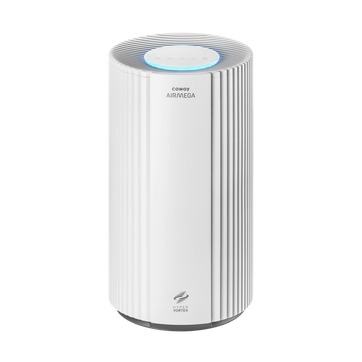
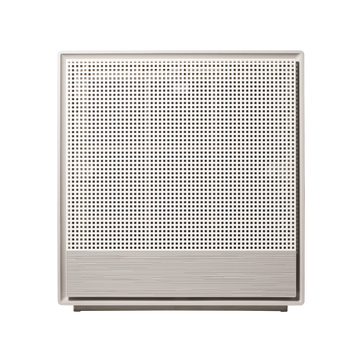
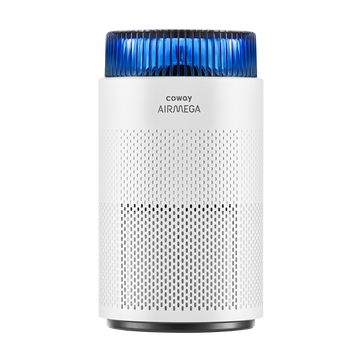
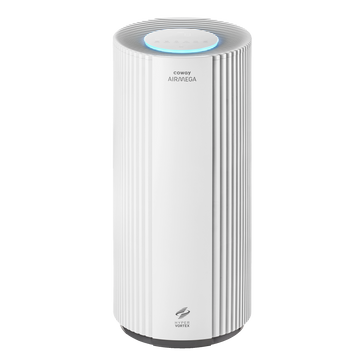
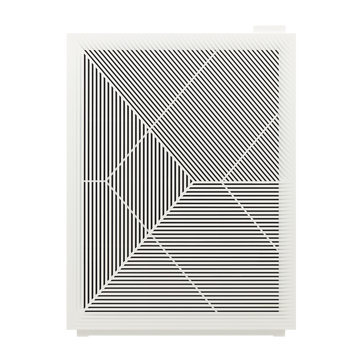
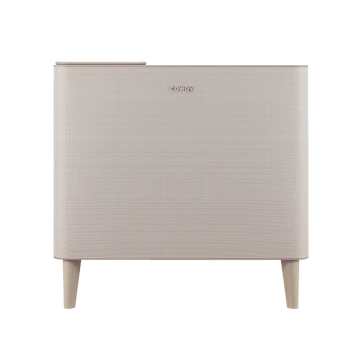
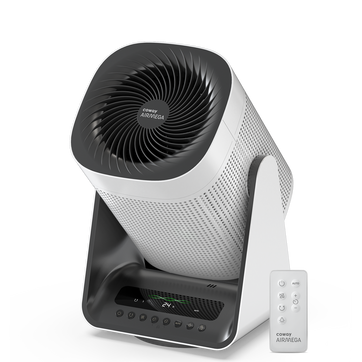
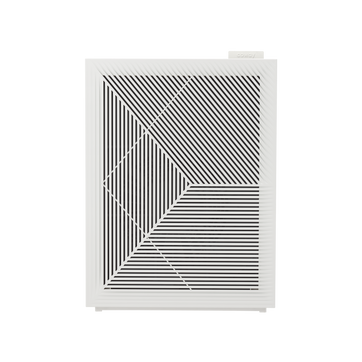
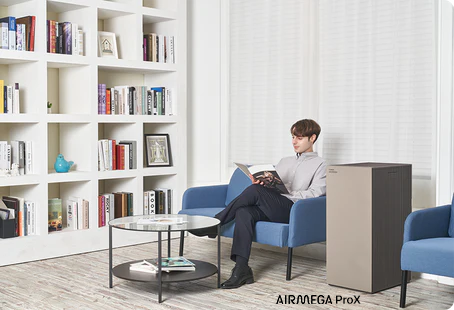
- Use a smart air purifier with a HEPA filter like Coway Airmega to remove airborne dander
Disclaimers
1 Airmega air purifiers have been proven to trap dust, pollen, dander in the air based on KCL(Korea Conformity Laboratories) testing. They have been tested according to the Korea Air Cleaning Association standard (SPS-KACA 002-132:2022 Modified) to measure the 0.01㎛ size of particle removal rate. It was tested on maximum airflow speed in normal room temperature and humidity conditions. The performance may vary in the actual living environment of customers. Tested with Airmega Aim, 50, 100, 150, Tower AP-1216L, Mighty AP-1512HH, MightyS AP-1512HHS, 200M, Icon, 230, 240, 250, 250S, 300, 300S, 350, 400, 400S, 450, ProX
2Our HEPA filter complies with IEST-RP-CC007 standards at speed level 1 as tested by SGS (Société Générale de Surveillance). SGS's test report only reflects SGS's evaluation of the sample and does not reflect the evaluation of the batch of goods from which the sample was taken. Tested with Airmega 100, 150, 160, Mighty AP-1512HH, MightyS AP-1512HHS, 200M, 230, 240, 250, 250S, 250 Art, 300, 300S, 350, 400, 400S, 450, ProX
3 Tested by KCL(Korea Conformity Laboratories) according to JEM 1467: 2015 condition, the concentration of acetic acid was proven to be reduced up to 99.5% in 60 minutes. Results may vary depending on actual environment. Tested with Airmega 150, Mighty AP-1512HH, 200M
4 Tested by KCL(Korea Conformity Laboratories) according to SPS-KACA002-132:2022, showed result of over 99.5% removal rate of common household gases including Ammonia, Acetaldehyde, Acetic acid, Formaldehyde, Toluene, Benzene, Nitrogen dioxide (NO₂), and Sulfur dioxide (SO₂) within 30 minutes. Results may vary in different environments and not all odors or gas particles may be removed. Tested with Airmega MightyS AP-1512HHS, 250S, 300S, 400S, 350, 450
5 Test conducted using Coway Allergen filter media (5×5 cm) placed in a polyethylene bag. The allergen solution and sample were immersed in 2 mL of phosphate buffer (100 ng/mL) prior to the reaction and heat-sealed to specimen size. The reaction was maintained at 4°C for 24 hours. Nichinichi Pharmaceutical Co., Ltd. conducted the test using ELISA to measure allergen concentration. Results may vary in actual product usage environments. Tested with Airmega Mighty AP-1512HH, 200M
6 Removal rates of Ammonia (NH₃) and Hydrogen Sulfide (H₂S) were tested in a 1 m³ chamber under EL608:2023 conditions for 30 minutes. Gas Detector Tubes were used for measurement, and testing was conducted by KCL (Korea Conformity Laboratories). Results may vary in actual product usage environments. Tested with Airmega Mighty AP-1512HH, 200M
7 Reduction rates of Naphthalene, Sulfur Dioxide, and Nitrogen Dioxide were tested using the Airmega Mighty AP-1512HH in 1㎥ chamber, following JEM-1467:2015 standards. Tests were conducted by Intertek. Actual performance may vary depending on the living environment. Tested with Airmega Mighty AP-1512HH, 200M
9 Tested by KCL(Korea Conformity Laboratories) according to SPS-KACA002-132:2022. The test was conducted with Methyl mercaptan, Isovaleraldehyde, Isovaleric acid in a 1.0±0.1 m³ chamber with a test time of 60 minutes at (24±4)°C and (46±10)% Relative Humidity. A removal ratio of over 99.5% was achieved. Results may vary depending on the actual usage environment. Tested with Airmega 350, 450
10 Tested by the Guangzhou Institute of Microbiology, exposed the filter media to protein solutions for 24 hours under ISO 4333-2022 standard. The results showed strong reduction performance: >99.79% for pollen, >99.60% for dog allergen, >99.90% for cat allergen, and >99.80% for dust mites matter allergen. Actual results may vary depending on room size, airflow, and pollutant levels. Tested with Airmega 350, 450
11 Tested by KCL(Korea Conformity Laboratories) according to SPS-KACA002-132:2022. The test was conducted in a 1.0±0.1 m³ chamber for 60 minutes at (24±4)°C and (46±10)% Relative Humidity. A removal ratio of >99.5% was achieved for Formaldehyde and Toluene in 60 minutes. Results may vary depending on the actual usage environment. Tested with Airmega 350, 450
12 Tested by Intertek. The evaluation was conducted against designated test materials: Sulfur dioxide, Nitrogen dioxide, and Naphthalene. The test was performed in a sealed 1.0×1.0×1.0 m (1.0 m³) odor chamber at a test room temperature of (23±2)°C (measured between 23.6∼23.9°C) and a test room humidity of (45±5)% R.H. (measured between 40∼48)% Relative Humidity. It met the odor removal rate of ≥99.9% for Sulfur dioxide, Nitrogen dioxide, and Naphthalene. Results may vary depending on the actual usage environment. Tested with Airmega 350, 450



